
How AI Should Choose a Restaurant for Five People With Different Preferences
Learn how AI should balance cuisine, budget, dietary needs, location and group preferences when choosing a restaurant for five people.
· 4 min read
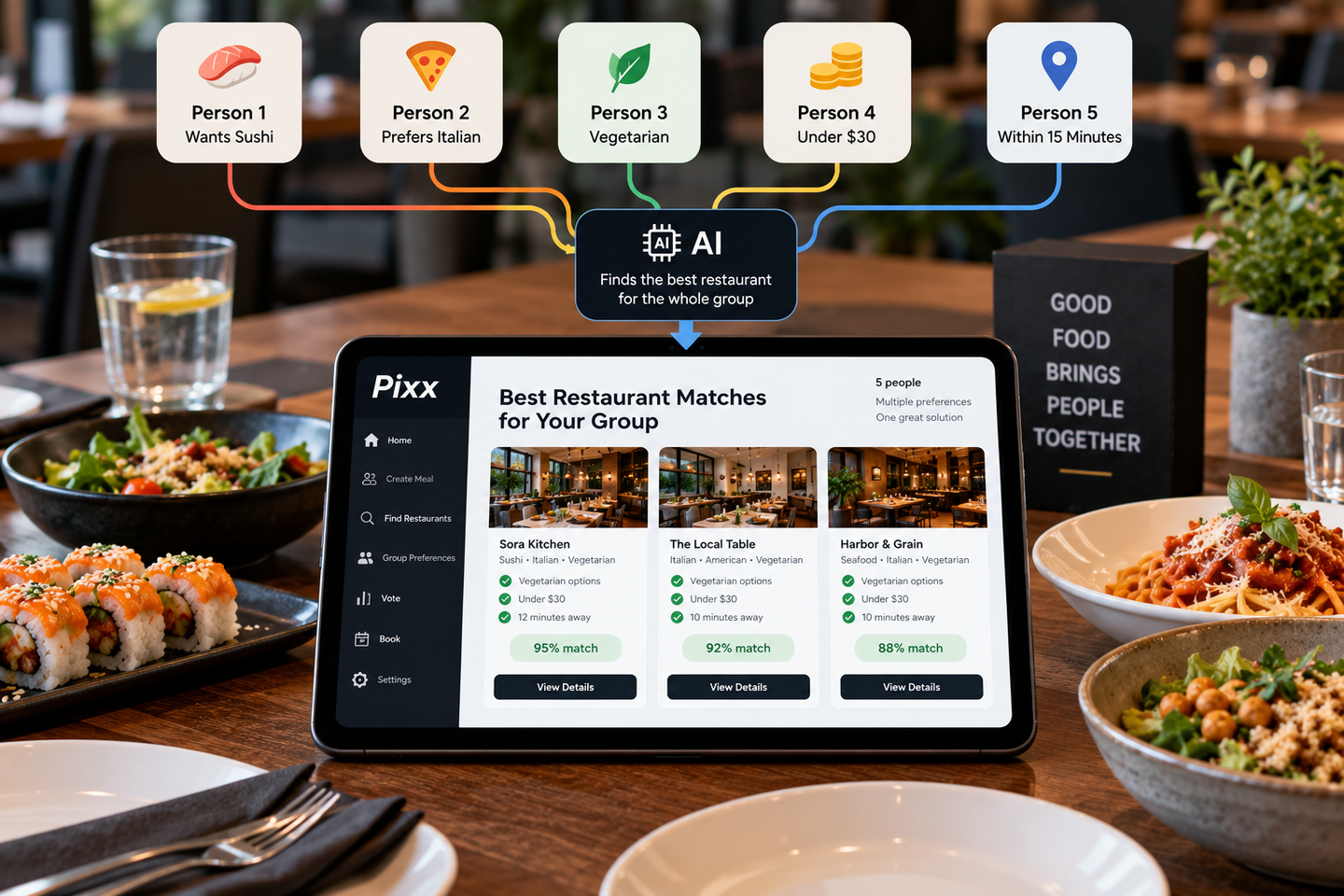
Choosing a restaurant for one person is easy.
Choosing for five people is a different problem.
One person wants sushi. Another wants Italian. Someone is vegetarian. Someone wants to spend less than $30. Another person does not want to drive more than 15 minutes.
A traditional restaurant recommendation system might struggle because there is no single preference to optimize around.
AI should handle group dining differently.
The first step should be collecting preferences from everyone involved.
That means more than asking for a cuisine.
A useful system should understand dietary restrictions, budget, distance, preferred cuisines, disliked cuisines and other factors that affect the final decision.
Once everyone has entered their preferences, AI should look for overlap.
If three people like Italian food, two like sushi and one person needs strong vegetarian choices, the system should not simply pick the cuisine with the most votes.
It should look for restaurants that satisfy the most important needs across the entire group.
That distinction matters.
Some preferences are flexible.
Others are not.
Someone might prefer sushi but still enjoy Italian food.
A vegetarian diner might need a restaurant with several real vegetarian options.
Someone with a strict budget might need the meal to stay below a certain price.
Good group restaurant recommendations should understand the difference between a preference and a constraint.
Location also matters.
If five people live in different places, choosing the restaurant closest to one person makes little sense.
AI should consider where everyone is coming from and look for locations that reduce unnecessary travel across the group.
The goal should be balance.
Not perfection for one person.
Not the restaurant with the highest overall rating.
Not the restaurant that appears first in search results.
The strongest choice is the restaurant that creates the best outcome for everyone going.
That is where group awareness becomes more useful than traditional personalization.
Personalized restaurant recommendations focus on one user.
Group-aware recommendations consider everyone involved in the meal.
We explored that difference in our article on group awareness versus personalization.
AI should also avoid giving groups too many choices.
A list of 50 restaurants does not solve decision fatigue.
It creates more work.
A better system should narrow the results to a small number of restaurants that already match the group well.
Then the group can vote.
That combines consensus with restaurant voting.
As we explained in Restaurant Voting vs. Consensus, voting works best after the group’s needs shape the shortlist.
This is the model behind Pixx.
Everyone joins the meal, enters their preferences and helps shape the restaurant choices.
Pixx then helps the group narrow the options and make the final decision together.
AI should not replace the group’s decision.
It should make the decision easier.
For five people with different preferences, the best restaurant recommendation is not the place one person loves most.
It is the place where everyone has a reason to say yes.