
Restaurant Voting vs. Consensus: What Is the Difference?
Learn the difference between restaurant voting and consensus, and why better group dining decisions start before the final vote.
· 5 min read
Restaurant Voting vs. Consensus: What Is the Difference?
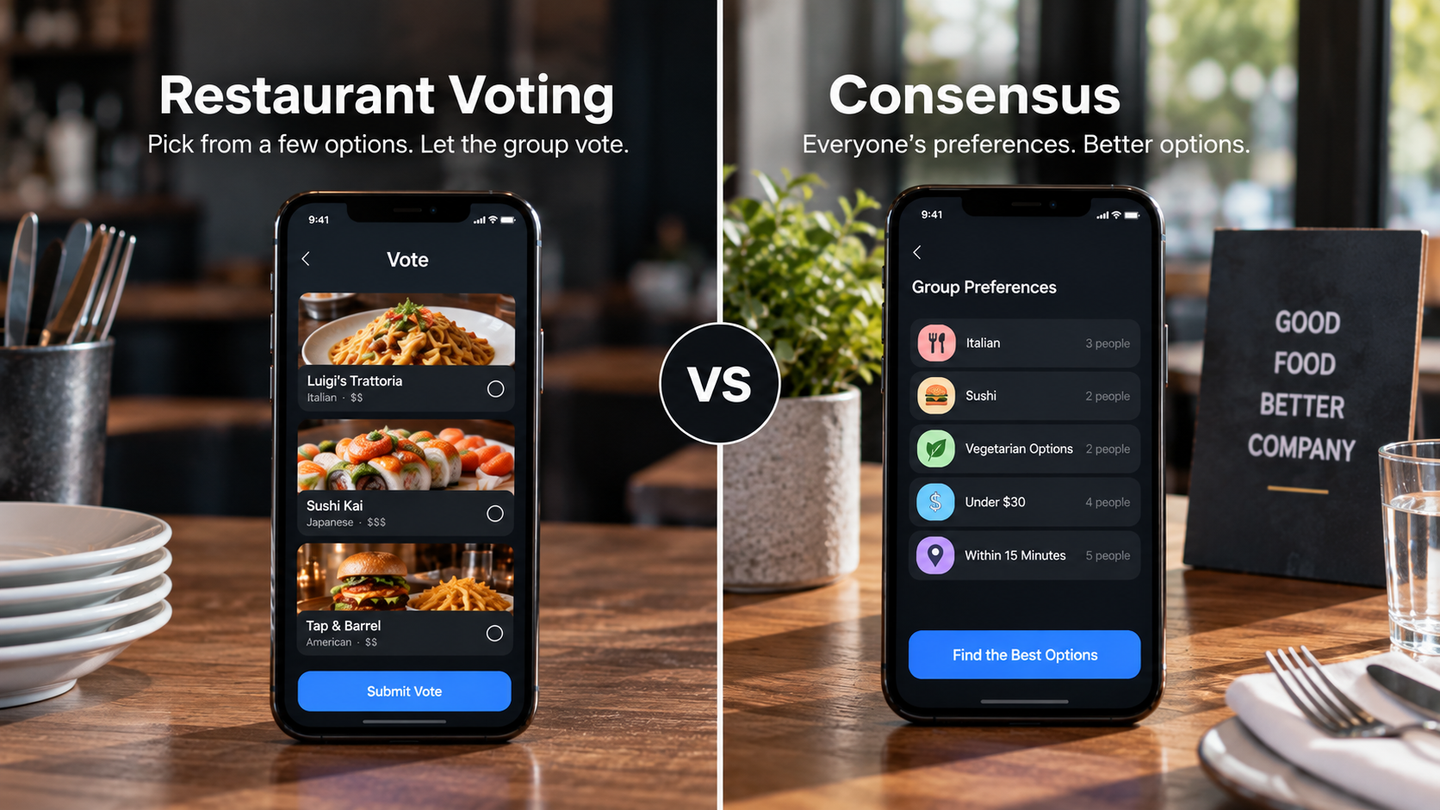
Restaurant voting sounds like the obvious answer to group indecision.
Pick a few restaurants, send the options to everyone and let the group vote.
That is better than having one person make the entire decision. But restaurant voting solves only part of the problem.
The bigger question comes before the vote.
Who decided which restaurants made the list?
That is where the difference between restaurant voting and consensus becomes important.
Restaurant voting usually starts with a shortlist. Someone searches for restaurants, picks three or four options and asks everyone else to choose.
The group gets a voice, but only after one person has already shaped the decision.
If that person leaves out vegetarian restaurants, chooses places that are too expensive or selects restaurants too far away, the vote begins with weak options.
Everyone gets a vote, but the group is still working inside one person’s choices.
Consensus starts earlier.
Instead of beginning with restaurants, a consensus-based process begins with people.
What cuisines does everyone want?
What dietary restrictions matter?
How much does everyone want to spend?
How far are people willing to travel?
Which preferences are flexible, and which ones actually affect whether someone can join the meal?
Once those inputs are collected, restaurant options are selected around the group.
Voting then becomes the final step instead of the first real step.
That difference matters.
Imagine six friends planning dinner.
One person wants sushi. Two want Italian. One person is vegetarian. Someone wants to keep dinner under $30. Another person does not want to drive more than 15 minutes.
With traditional restaurant voting, one friend might choose five restaurants and send them to everyone.
With consensus, the system first looks at what all six people need and want. Then it finds restaurants that make sense for the group.
The group still votes, but now the choices are more relevant.
That is the idea behind Pixx.
Pixx lets everyone participate before the restaurant shortlist is finalized. Friends join the meal, share preferences and help shape the restaurant options.
That creates a different kind of group restaurant decision.
Voting asks:
“Which of these restaurants do you like?”
Consensus asks:
“Which restaurants make the most sense for everyone?”
The distinction also matters when groups have different dietary restrictions, budgets or location preferences.
A restaurant might win a simple popularity vote while still being a poor fit for one or two people in the group.
Consensus reduces that risk by considering those constraints earlier.
This connects directly to the broader shift from personalization to group awareness.
Personalized restaurant apps focus on the individual using the phone.
Group-aware systems focus on everyone who plans to sit at the table.
Restaurant voting remains useful. Groups should still have a say in the final choice.
But voting works better when the options already reflect the group.
That is why restaurant voting and consensus are not the same thing.
Voting helps a group choose from a list.
Consensus helps create the right list in the first place.
For social dining, that is the bigger problem worth solving.