
Why Restaurant Recommendations Break When More Than One Person Is Choosing
The future of social dining belongs to restaurant recommendation systems designed around that reality.
· 5 min read
Restaurant recommendations work well when one person is choosing. You search for sushi, Italian, tacos or something nearby, and the app gives you a list based on your preferences, location and past behavior.
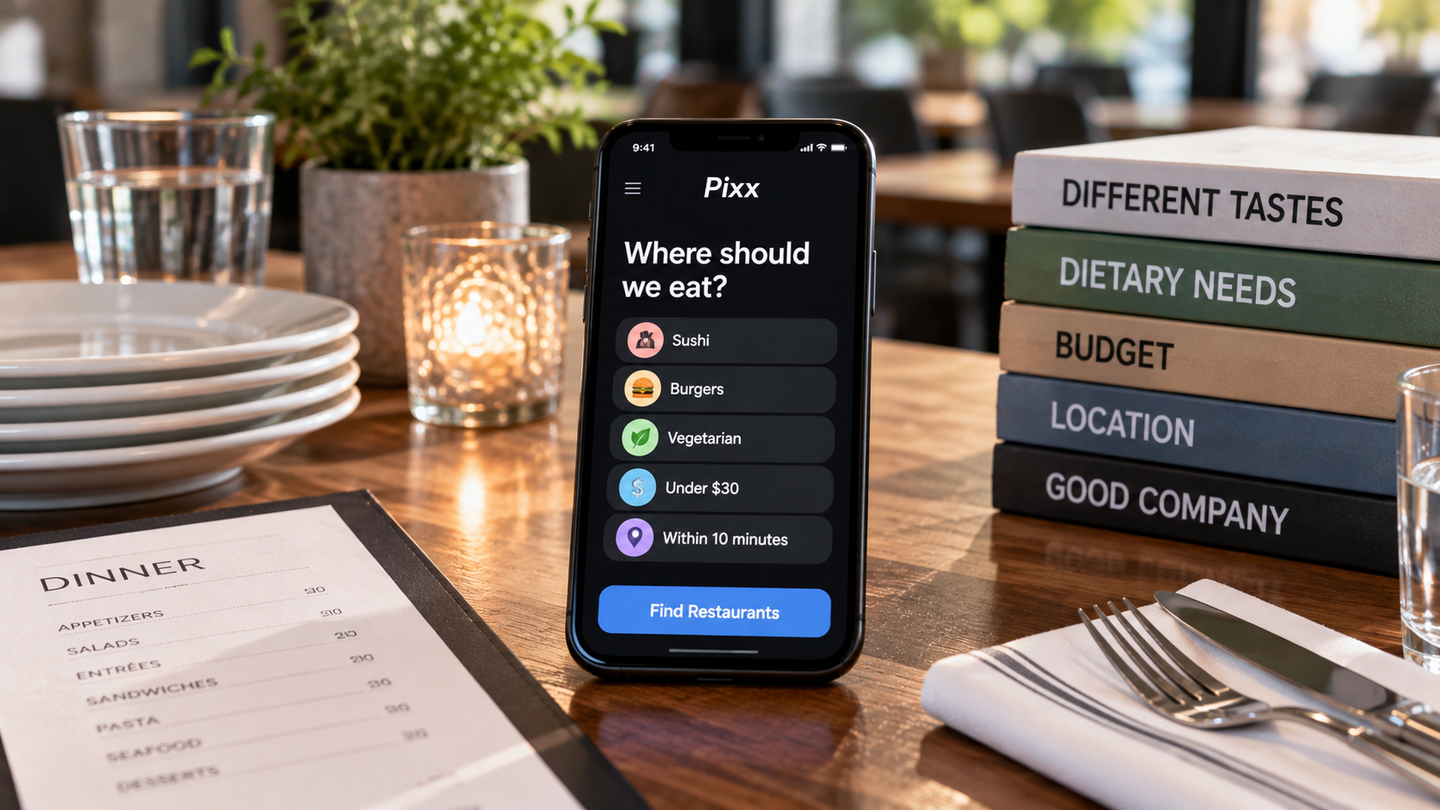
The problem starts when dinner includes more than one person.
A group of five does not have one preference. It has five.
One person wants Thai food. Another wants burgers. Someone is vegetarian. Someone wants to spend less than $30. Another person does not want to drive more than 10 minutes.
Most restaurant recommendation systems were never built for that situation. They were designed to help one person find a restaurant, then assume that person will make the final decision.
That is why restaurant recommendations often fall apart in group settings.
The first problem is that traditional recommendation systems optimize for the person holding the phone. The app knows what you search for, what you click and where you have eaten before. It knows much less about the four other people joining you for dinner.
The result might be a great recommendation for you and a poor choice for the group.
The second problem is that group dining includes more variables. Cuisine is only one factor. Groups also need to consider price, dietary restrictions, distance, atmosphere and availability.
A restaurant might have great reviews and still fail because one person cannot eat anything on the menu.
Another place might work for everyone's diet but cost more than someone wants to spend.
A third option might satisfy everyone but sit 40 minutes away.
The group has to balance all of these factors before anyone even starts voting.
Then comes the group chat.
Someone sends a restaurant link. Another person suggests something else. Someone says, "I'm good with anything," then rejects the next three choices. One person stops replying. Another introduces a completely different cuisine.
The problem is no longer restaurant discovery.
The problem is agreement.
This is why group restaurant recommendations need to work differently from individual recommendations.
Instead of asking, "What does this user want?" a group recommendation system needs to ask, "What works for everyone involved?"
That requires group awareness.
A better process starts by collecting preferences from everyone. Each person shares what they want, what they do not want, dietary needs, price preferences and other factors that matter.
The system then looks for restaurants that create the strongest match across the entire group.
That is the idea behind how Pixx approaches group dining.
Instead of making one person search for restaurants and negotiate with everyone else, Pixx lets the group participate from the beginning. Friends join the meal, enter their preferences and vote on restaurant choices that make sense for the group.
This also explains why restaurant voting alone does not fully solve the problem.
If one person chooses five restaurants and asks everyone to vote, the group is still choosing from that person's shortlist.
The better approach is to involve the group before the shortlist exists.
Restaurant recommendations do not break because people suddenly become difficult when they eat together.
They break because most recommendation systems treat a group like a single user.
Groups are different.
The future of social dining belongs to restaurant recommendation systems designed around that reality.